Prof Dan TSANG featured in Yicai’s “Innovative Generation Z,” calling for AI-enabled, cross-border engineering talent to drive sustainability impact
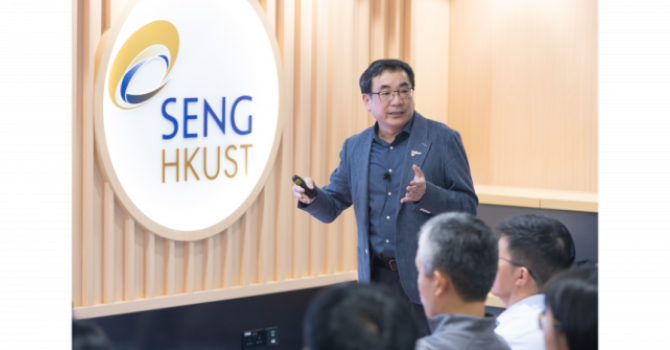
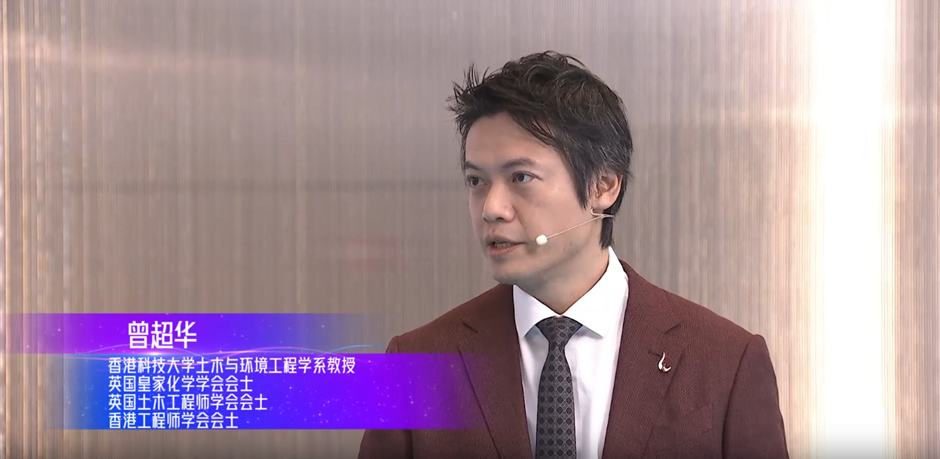
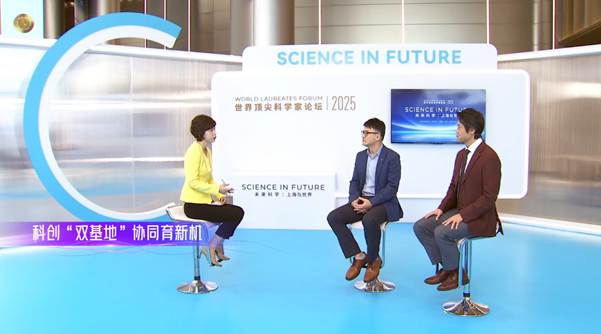
Professor Dan TSANG, Professor in the Department of Civil and Environmental Engineering (CIVL) at the Hong Kong University of Science and Technology (HKUST) and Director of HKUST’s Research Center on Decarbonization Technology (RCDT), was invited by Yicai Media to take part in its “Innovative Generation Z (科创Z世代)” special recording at the Youth Scientists Conference of the 2025 World Laureates Forum on 24 October 2025 in Shanghai. The series brought together ten young scientists to respond to a single forward-looking question: “Where will science take us in ten years?” and was designed to capture how today’s emerging research leaders believe science will reshape industry, policy, and daily life over the next decade.
Prof. Tsang appeared in the session “Integration: Cross-disciplinary research and international cooperation”. The session highlighted how high-impact innovation now depends on combining intelligent manufacturing, AI, sustainability, and built-environment resilience, and on moving ideas across borders rather than keeping them in isolated research silos.
When asked about long-term international collaboration, he stressed that scientific cooperation is not only about publishing together; it is about trust, alignment, and accountability. He pointed to the importance of listening to user needs and market needs, adapting solutions to different regulatory and technical environments, and delivering shared benefits across partners. Sustained cross-border work, he said, depends on “upholding trust and earning respect” by delivering what is promised.
Looking forward to 2035, Prof. Tsang said that the boundary lines between disciplines will continue to dissolve. With AI making complex knowledge more accessible, he expects the next decade of sustainability-driven engineering to be defined by integrated systems thinking rather than narrow specialization. Future infrastructure materials and intelligent manufacturing technologies will not only aim to reduce environmental impact; they will be designed from the start to deliver added societal function, supporting cleaner, safer, and more resilient cities.
He also outlined the kind of talent this future will require. The next generation, he argued, must be able to make good decisions from large and noisy information streams, allocate limited time and resources to the highest-impact questions, and recognize complementary contributions across teams and institutions. In his view, this ability to collaborate across disciplines and across regions is now a core competency, not an optional skill.
For HKUST, this is both a research agenda and a training agenda. CIVL focuses on sustainability, intelligent infrastructure, and environmental protection as core pillars of civil and environmental engineering, preparing graduates to build climate-ready cities. RCDT extends that mission by serving as a platform that links Hong Kong and Mainland partners to accelerate decarbonization technologies and deliver solutions with real societal impact.
Relevant link: