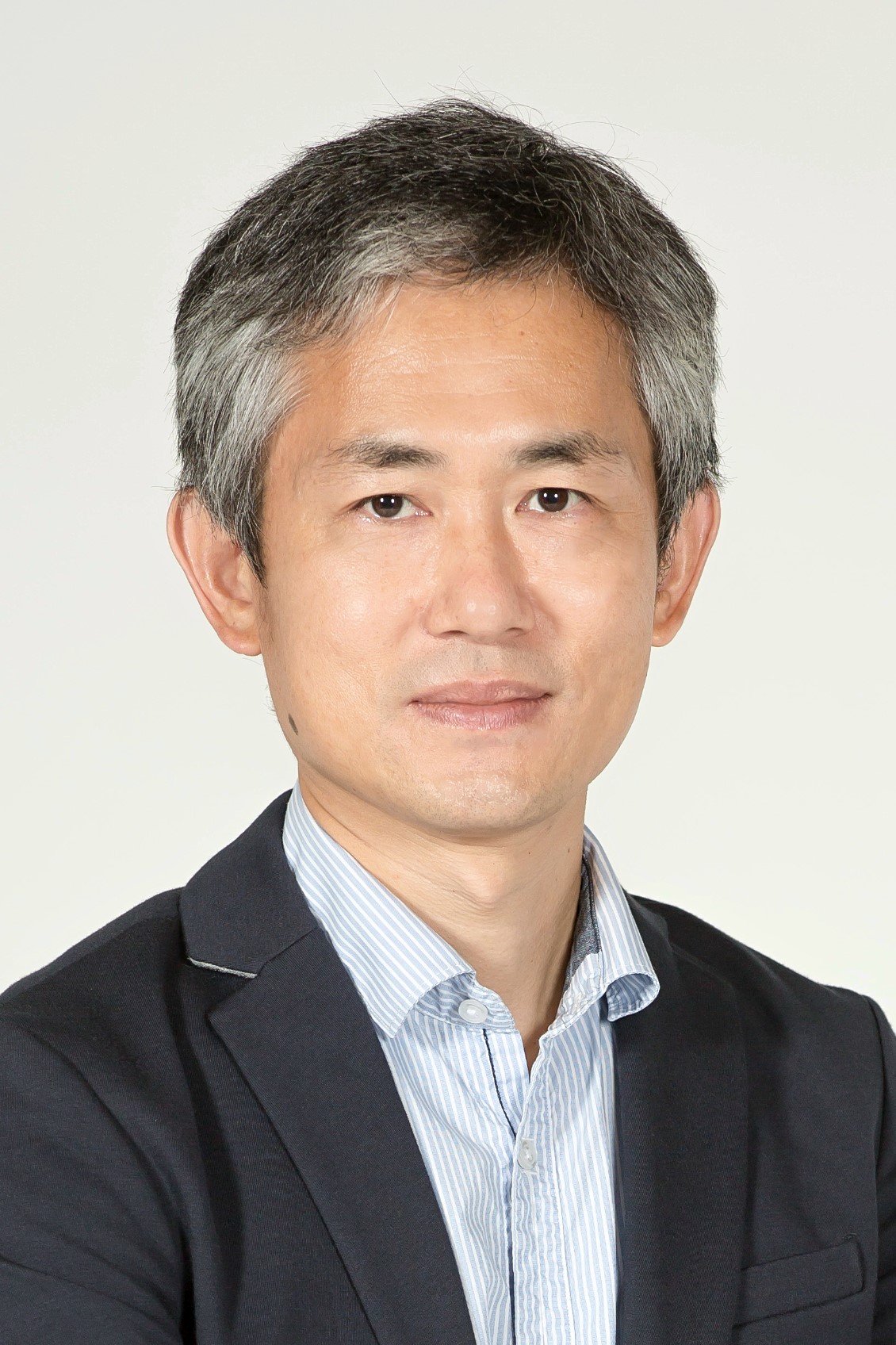
Jidong
ZHAO
趙吉東
PhD in Civil Engineering, Tsinghua University
Computational Geomechanics Lab Openings
High caliber candidates are welcome to apply for multiple openings of Ph.D. and postdoc research fellow positions at Prof Jidong Zhao’s Computational Granular Mechanics Lab (visit his Lab website: http://jzhao.people.ust.hk/ for more information).
Research Focuses and Projects
Dr. Zhao develops scalable computational methods to elucidate the multiscale mechanics and physics of saturated and partially saturated granular media, employing novel micromechanics models that link grain- and pore-scale phenomena, including particle morphology, frictional contacts, sliding/rolling, and multi-phase flows, to emergent behaviors such as strain localization, liquefaction, collapse, failure, and phase transitions. His predictive tools address critical geohazards (e.g., landslides, embankment failures) and climate/energy challenges (e.g., permafrost thaw, carbon sequestration, methane hydrates), and are synergistically integrated with data science, machine learning, and sensing technologies to create advanced physics-based digital twin platforms. Beyond geomechanics, these innovations extend to computational solutions for metal additive and pharmaceutical tablet manufacturing.
His major ongoing project awards include:
• A Digital Twin for Enhancing Coastal Resilience against Extreme Storm Surges in Hong Kong. HK$62,893,000. (PC) (RGC/TRS Project, 2025-2029)
• A general purpose multiscale, multiphysics computational platform for granular media, CNY2,300,000. (PC) (NSFC Key Project, 2025-2029)
• A multiscale digital twin for sinkhole prediction: integrating MPM, CFD-DEM, and machine learning for urban geohazard assessment. HK$1,014,504. (PI) (RGC/GRF, 2027-2029)
• A Differentiable Computational Framework for Modeling Sediment-Fluid-Mineral Nodule Interactions in Deep-Sea Mining. HK$1,082,797. (PI) (RGC/GRF, 2025-2028)
• A unified peridynamics theory on modeling fully coupled thermal-hydro-mechanical behaviors in geomaterials. HK$1,134,931. (PI) (RGC/GRF, 2024-2027)
Selected Recent Publications
• Cheng Z., Zhao S.W., Chen H., Zhao J.D. (2026). Stabilized explicit two-phase material point method for robust solid-fluid coupling in large-deformation porous media. Computer Methods in Applied Mechanics and Engineering. 456: 118957. doi: 10.1016/j.cma.2026.118957.
• Yu J.D., Zhao J.D., Liang W.J. (2026). Multiscale modeling of coupled thermo-hydro- mechanical-chemical behavior in hydrate-bearing sediment. Journal of the Mechanics and Physics of Solids. 210: 106512. doi: 10.1016/j.jmps.2026.106512.
• Yang C.Y., Zhao J.D., Zhu F. (2026). Coupled thermo-hydrodynamic-mechanical peridynamics for thermal fluid-solid interactions with fracturing. Journal of the Mechanics and Physics of Solids. 208: 106492. doi: 10.1016/j.jmps.2025.106492
• Yu T., Zhao J.D. (2026). Resolved CFD-DEM for high-fidelity multiphase flow modeling in porous media of arbitrary geometry. Computer Methods in Applied Mechanics and Engineering. 450: 118676. doi: 10.1016/j.cma.2025.118676.
• Feng R.F., Zhao J.D., Fourtakas G., Rogers B.D. (2026). GeoDualSPHysics: a high- performance SPH solver for large deformation modelling of geomaterials with two-way coupling to multi-body systems. Computer Physics Communications. 320: 109965. doi: 10.1016/j.cpc.2025.109965.
• Chen H., Zhao S.W., Zhao J.D. (2026). Heterogeneous hybrid resolved-unresolved CFD- DEM coupling for fluid-particle interactions. International Journal of Mechanical Sciences. 309: 110992. doi: 10.1016/j.ijmecsci.2025.110992.
• Das A., Zhao J.D., Sweijen T. (2025). Micromechanical modeling of triphasic granular media. Proceedings of the National Academy of Sciences (PNAS). 122(18): e2420314122. doi: 10.1073/pnas.2420314122.
• Yang C.Y., Zhao J.D., Zhu F., Feng R.F. (2025). A multi-horizon Peridynamics for coupled fluid flow and heat transfer. Journal of Fluid Mechanics. 1010, A66. doi: 10.1017/jfm.2025.367.
• Yang C.Y., Zhu F., Zhao J.D. (2024). Coupled total- and semi-Lagrangian peridynamics for modelling fluid-driven fracturing in solids. Computer Methods in Applied Mechanics and Engineering. 419: 116580. doi: 10.1016/j.cma.2023.116580.
• Yu J.D., Zhao J.D., Liang W.J., Zhao S.W. (2024). A semi-implicit material point method for coupled thermos-hydro-mechanical simulation of saturated porous media in large deformation. Computer Methods in Applied Mechanics and Engineering. 418: 116462. doi: 10.1016/j.cma.2023.116462.
• Shi K., Zhu F., Zhao J.D. (2024). Multiscale analysis of shear behavior of crushable granular sand under general stress conditions. Géotechnique. 74(5): 443-460. doi: 10.1680/jgeot.21.00412 .
• Zhao J.D., Zhao S.W., Luding S. (2023). The role of particle shape in computational modelling of granular matter. Nature Reviews Physics. 5: 505-525. doi: 10.1038/s42254-023-00617-9 .
• Lai Z.S., Zhao J.D., Zhao S.W., Huang L.C. (2023). Signed distance field enhanced fully resolved CFD-DEM for simulation of granular flows involving multiphase fluids and irregular-shaped particles. Computer Methods in Applied Mechanics and Engineering. 414: 116195. doi: 10.1016/j.cma.2023.116195.
• Yu T., Zhao J.D. (2023). Quantifying the mechanisms of keyhole pore evolutions and the role of metal-vapor condensation in laser powder bed fusion. Additive Manufacturing. 72: 103642. doi: 10.1016/j.addma.2023.103642.
• Liang W.J., Zhao J.D., Wu H.R., Soga K. (2023). Multiscale, multiphysics modeling of saturated granular materials in large deformation. Computer Methods in Applied Mechanics and Engineering. 405: 115871. doi: https://doi.org/10.1016/j.cma.2022.115871 .